The short answer
The model number tells us more than any description of the problem, and it is usually easier to find than people expect. Take the serial number too. Two machines with the same name on the door can need different parts.
Where the model number is
- Refrigerator: inside, on a side wall, usually near the top or behind the crisper drawers.
- Freezer: inside the lid on a chest freezer, on a side wall or the rear exterior on an upright.
- Washer: inside the door opening on a front loader, under the lid or on the rear panel on a top loader.
- Dryer: inside the door opening, or on the back panel near the vent.
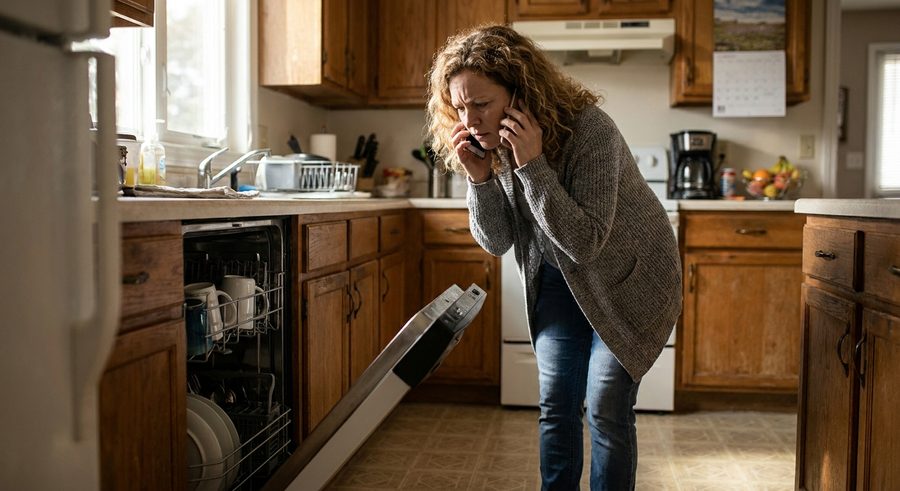
- Dishwasher: on the tub edge around the door opening, visible with the door open.
- Range or oven: behind the bottom storage drawer, on the frame inside the door, or on the rear.
- Built in or over the range microwave: inside the door frame, or on the top or rear of the cabinet.
Take the serial number too. Two machines with the same name on the door can take different parts, and the sticker is the only thing that tells us which one you have.
What to describe
- What the machine does, in your own words. What it sounds like and what it smells like. You do not have to guess what is wrong, just tell us what it does.
- When it started, and whether anything changed at the same time: a power cut, a move, a new installation nearby.
- Any error code, exactly as it appears, letters and digits both. Codes are model specific.
- Whether there is water on the floor, and whether it appears only during a cycle or all the time.
- What you have already tried, including resets and filter cleaning, so nobody repeats it.
- Where it sits: a kitchen, a basement, a garage or an outbuilding. That changes what we check and how we get to it.
The free checks worth doing first
- Confirm the outlet works with something else, and check the breaker. An electric dryer runs on two legs and can tumble with no heat if one has failed.
- Make sure a door or lid switch is actually latching. It is a common reason a machine appears dead.
- Clear the filters. A blocked dishwasher filter, a clogged dryer vent and a jammed washer pump filter each produce symptoms that look like a failed appliance.
- Where a reset exists, use it once. If the fault returns straight away, the reset was not the answer.
- Check the machine is level if it is banging or walking.
Where to stop
Stop at the panel. Once a cover comes off you are near live terminals, sharp edges and sometimes a sealed refrigerant line. None of that is a first try job.
If you smell burning or see a scorched connector, stop, unplug it and leave it alone. If you smell gas near a range, that is not a repair question. Shut the supply off, get out, and call the gas company first.