In an older house this is a fit question before it is an appliance question. The real cost of a replacement is whether the new machine goes into the hole the old one came out of, and what the carpentry and the wiring cost when it does not.
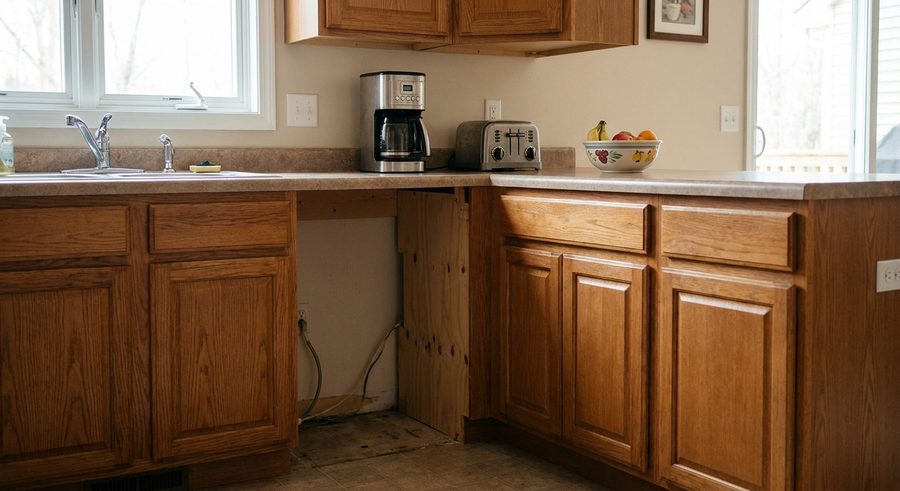
The opening decides it, not the budget
Kitchens laid out before 1940 were not drawn around a 36 inch refrigerator or a 24 inch dishwasher. Plenty of new machines will not go into the space the old one occupied. Cutting a cabinet run to make one fit is often the single biggest cost in a replacement, and a repair does not carry that cost at all.
Measure three things before you shop. The width and height of the opening. The depth with the door open. And the path from the front door to the kitchen, because a narrow doorway or a turn at the top of a staircase decides whether the machine can reach the room in one piece.
The outlet and the circuit
Older kitchens often have a two prong outlet behind the range, or a 15 amp circuit feeding something that now wants more. An electrician is real money on a replacement and no money at all on a repair.
Over the range microwaves trip people up the most. One is wired to its own circuit and bolted into cabinetry built for that exact unit, so replacing it is a carpentry job and an electrical job as well as an appliance job. On the repair side, the fault is usually the door latch switch at $160 to $350.
Why this comes up so often around here
The housing around here is old. The middle house in Jamestown, Olean, Warren and Bradford was built in 1938, and in Erie and Meadville it was built in 1950. Those kitchens were sized for appliances that are no longer sold.
So the fit problem is the normal case here and not an edge case. It is the main reason a working repair beats a replacement around here more often than the age of the machine would suggest. A new dishwasher runs $700 to $1,600 installed, and that figure assumes it slides straight into the space you already have.
What this looks like in an older house
Most of the houses around here are old. In Bradford about three in five went up before 1940, and Warren, Olean and Jamestown are all above half. In a house that age the cabinet opening, the doorway and the circuit were all sized for a smaller machine than anything sold today.
So a new one often needs work doing before it even fits, and none of that shows on the price tag. A repair skips it.
Questions people ask
Which appliance problems need attention first?
Start with anything unsafe, then anything with food in it, then everything else. A dryer that runs but will not heat is usually safe to leave for a few days. A dryer that is hot to the touch on the outside is not. Lead with the water or the food when you call, not with the brand.
What does appliance repair usually run?
Price follows the part, and the parts that fail most often are the cheap ones. A thermostat, a door switch, a drain pump or a fan motor sits at the cheap end. A control board sits in the middle. A sealed system or a compressor is its own job and gets quoted on its own. The useful question on the phone is which part we suspect and what it costs.
Can I still get parts for an old appliance?
Older machines were built to be opened up, and that counts for a lot. A machine built before electronic diagnostics is often faster to fault find, not slower, because you can see what failed. Find out whether the part exists, then decide.
Related questions
Refrigerator not coolingStart with the condenser coil and the door seal, because both are free to check and both stop a refrigerator from cooling.Refrigerator not cooling but the freezer is fineA warm refrigerator with a cold freezer is an air problem, not a compressor problem.Dryer squeakingA squealing or thumping dryer is usually worn drum rollers, a worn idler pulley or a rear drum bearing.Get the fault named first
The part decides the price, so the diagnosis comes before the figure.
(716) 414-5233